The Terrifying Truth About Stonehenge: A Revelation from Archaeologist Mike Parker Pearson
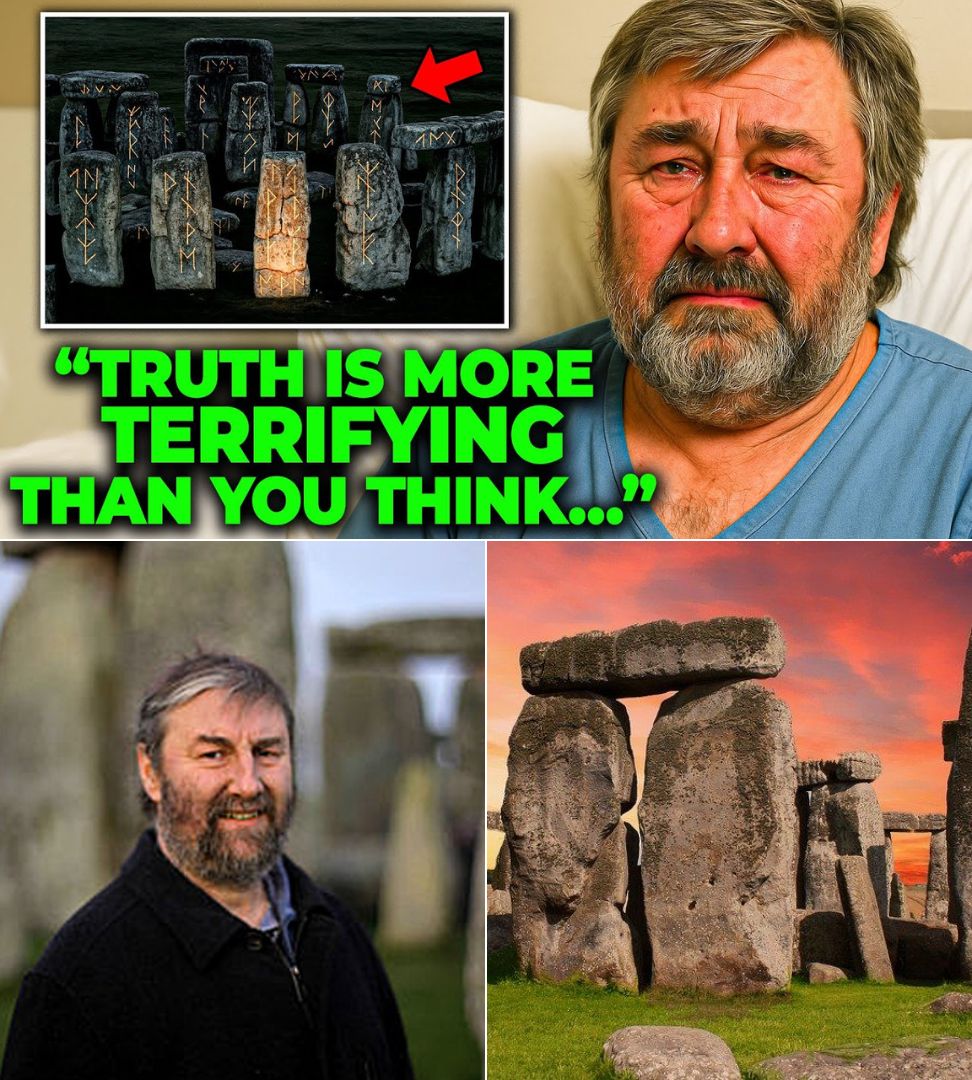
 In a shocking revelation that has the archaeological world buzzing, the late Mike Parker Pearson unveiled a terrifying truth about Stonehenge just before his passing. This iconic monument isn’t merely a burial ground; it embodies a complex civilization’s deep spiritual connection between the living and the dead.
For over 5,000 years, Stonehenge has captivated minds with its colossal stones, each weighing up to 40 tons. The questions surrounding its construction and purpose have inspired countless theories, from ancient druids to extraterrestrial visitors. Yet, Pearson’s groundbreaking work suggests a much more profound narrative.
Pearson, who dedicated his life to understanding the societal implications of Stonehenge, proposed that it was part of a larger sacred landscape. His radical approach involved turning away from the stones themselves and instead focusing on the surrounding fields and riverbanks, igniting a decade-long investigation known as the Stonehenge Riverside Project.
 What Pearson and his team discovered was astonishing: a sprawling Neolithic settlement at Durrington Walls, just two miles northeast of Stonehenge. This wasn’t a mere collection of huts; it was the largest Neolithic village ever found in Britain, teeming with life and activity.
The sheer volume of artifacts unearthed—animal bones, pottery, and tools—paints a vivid picture of a bustling community that thrived alongside the monument. This “land of the living” was intricately linked to the “land of the dead,” with the river Avon serving as a ceremonial highway between the two realms.
Pearson’s team also unearthed evidence of a lost stone circle, dubbed Blue Stonehenge, which acted as a spiritual gateway for ancient processions. This discovery solidified the connection between Durrington Walls and Stonehenge, transforming the narrative from a solitary monument to a centerpiece of a vast ritual kingdom.

But the most shocking revelations came from the analysis of animal bones found at Durrington Walls. The remains of around 9,000 pigs and cattle indicate massive feasts, suggesting that thousands gathered for elaborate celebrations. These were not mere meals; they were grand rituals, connecting the living with their ancestors.
However, the bones found at Stonehenge itself tell a darker story. The cremated remains of at least 63 individuals suggest that Stonehenge served as an exclusive burial ground for a powerful elite rather than a communal site for all.
 As Pearson pieced together this intricate web of life, death, and ritual, he uncovered a profound cultural shift that ultimately led to the abandonment of Stonehenge. The arrival of the Bronze Age marked a transition from communal beliefs centered around ancestral reverence to individualism and personal wealth.
The once-thriving society that constructed Stonehenge faded into obscurity, leaving behind a haunting reminder of the fragility of belief systems. The stones stand as a testament to a vanished faith, echoing the unsettling truth that even the most powerful civilizations can collapse under the weight of change.
This chilling narrative forces us to confront the impermanence of our own beliefs and monuments. As we look upon the silent stones of Stonehenge, we are reminded that what once seemed unshakeable can, in time, become irrelevant.
Mike Parker Pearson’s legacy lives on through this revelation, challenging us to reflect on the delicate balance between the living and the dead, and the cultural narratives that define our existence.