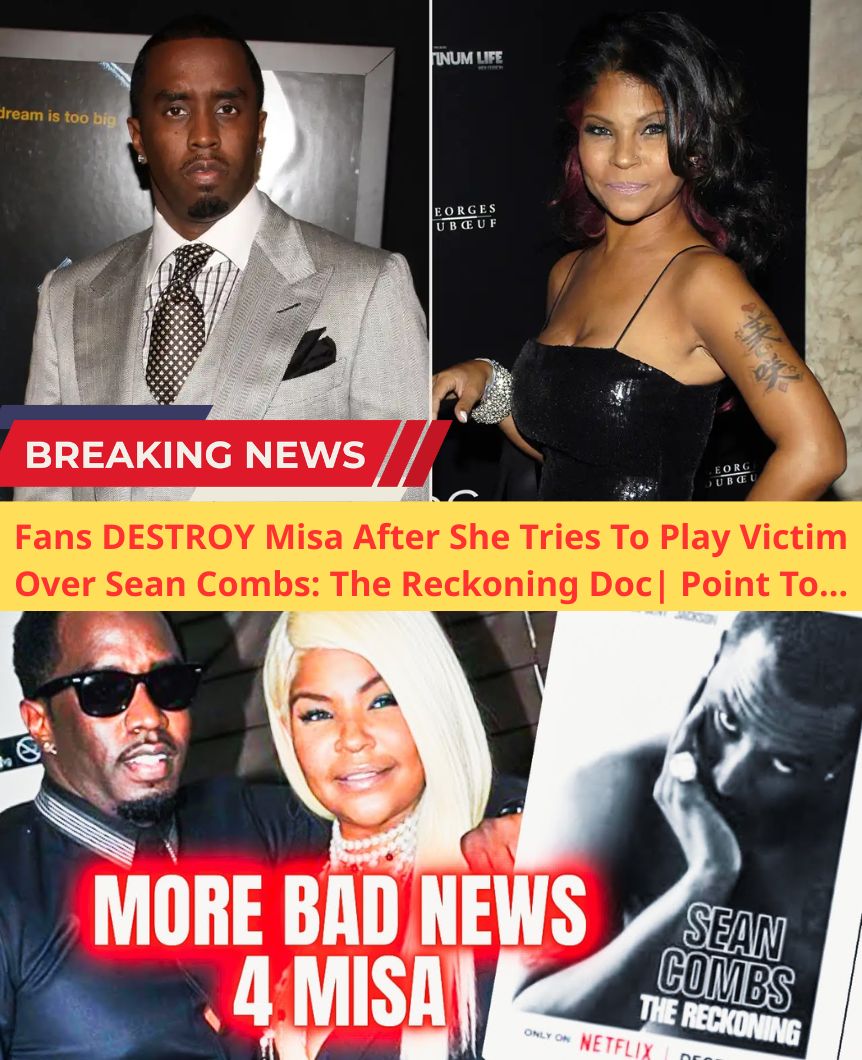
A social media firestorm has erupted around Misa Hylton, the former partner of Sean “Diddy” Combs and mother of his son Justin, following her online reaction to the explosive documentary “Diddy: The Reckoning.” Fans and commentators are accusing Hylton of attempting to play the victim after she suggested producers misled her, a claim that has been met with widespread derision and criticism.
The controversy ignited when Hylton took to her Instagram Stories to share private messages from Alex Stapleton, a director and producer on the Netflix documentary. The messages show Stapleton respectfully reaching out to Hylton for a potential interview, clearly stating the project was for Netflix and involved multiple Bad Boy narratives.

In the exchange, Hylton initially agreed to a call but later publicly framed the interaction as deceptive. “I misunderstood Eric. I thought it was my own show. I’m not doing interviews about Shawn,” Hylton posted, sharing Stapleton’s message. This attempt to imply she was conned has spectacularly backfired, with the public and media critics dissecting her long-standing public alignment with the Bad Boy brand.
Observers are swiftly pointing out the stark contradiction in Hylton’s position. For years, she has centered her public identity on her role within Diddy’s inner circle and the Bad Boy legacy, even announcing plans to write a book titled “Bad Girl for Life.” Her social media history includes boasts about contributing to the empire’s foundation.
This perceived hypocrisy is at the core of the backlash. Critics argue Hylton has consistently leveraged her association with Diddy for clout and opportunity but now, as the documentary unveils harrowing allegations against him, she is attempting to feign ignorance and distance herself. “You cannot literally flex as a legacy bad boy. But then when we’re like, ‘Okay, but this is what was going on. Can you tell us more?’ All of a sudden, you don’t know nothing,” one commentator noted.
The backlash intensified as users contrasted Hylton’s stance with other figures featured in the documentary, such as Roger Bond and Capricorn Clark, who offered candid accounts and took accountability for their past moral compromises within Diddy’s orbit. Hylton’s refusal to participate, followed by her victim narrative, is seen as a failed attempt to control a story she once proudly championed.
Further fueling the criticism is Hylton’s own past behavior. Many are recalling that she was among the first to publicly allude to Diddy’s troubling nature following their son Justin’s 2023 arrest, writing “We’re going to stop acting like something’s not wrong with you.” This makes her current defensive posture, which many interpret as protecting Diddy to shield her son’s inheritance and status, appear even more opportunistic.
Her subsequent Instagram posts, filled with biblical allegories and vague affirmations about surviving “spiritual warfare,” have done little to quell the anger. Instead, they are being parsed as a performative and clumsy effort to deflect criticism without directly addressing the substance of the documentary’s revelations or her own historic complicity.
The online consensus is clear: Hylton is seen as trying to “have it both ways.” She is accused of wanting the prestige and legacy of the Bad Boy association while refusing any responsibility for the toxic culture it allegedly fostered. As the documentary continues to generate shockwaves, Hylton’s reaction has positioned her not as a sympathetic figure, but as a symbol of the willful silence that allowed alleged misconduct to persist.
This episode underscores a broader public fatigue with enablers in the entertainment industry. The message from fans is unequivocal: in the wake of such serious allegations, there is no room for ambiguous loyalties or revisionist history. The reckoning, it seems, is not just for the central figure, but for the ecosystem that supported him.