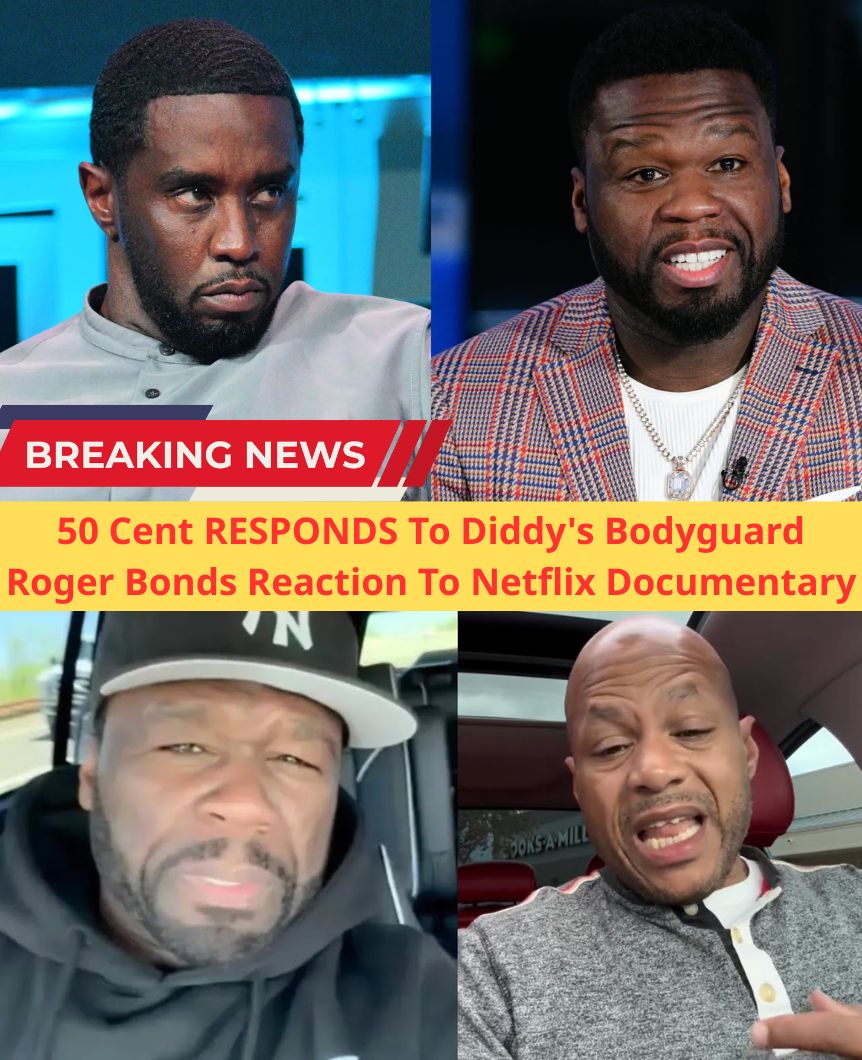
A new and explosive allegation has surfaced in the ongoing saga surrounding Sean “Diddy” Combs, this time from an unexpected source: his former bodyguard. The claim has prompted a swift and characteristically pointed public response from longtime industry rival Curtis “50 Cent” Jackson.
In a video circulating online, Diddy’s former head of security, Roger Bonds, makes a startling connection between Diddy’s documented legal troubles and a recent high-profile documentary. Bonds specifically references the damning footage featured in Netflix’s “Diddy: The Final Chapter.”
Bonds alleges a pattern of financial exploitation by the Bad Boy Records founder, targeting young videographers. He claims Diddy would contract them at a low rate for 24/7 documentation of his life, then dispute the extensive hours billed.
“The invoice he put in… it’s 160 something hours in a week. You was outside 140,” Bonds states in the video. He then delivers the crucial allegation: when Diddy would allegedly refuse to pay according to the contract, the videographer would own the footage.
“That footage goes to the highest bidder,” Bonds asserts, “and 50 had to be the highest bidder to get that.” This directly implicates 50 Cent in the procurement of the sensitive material that fueled the documentary’s most damaging revelations.
50 Cent, who executive produced the Netflix series and has relentlessly mocked Diddy online for months, wasted no time in responding. He reposted the clip of Roger Bonds on his social media with a caption that transformed the allegation into a boast.

“See I’m the highest bidder, I got the receipts,” 50 Cent wrote, effectively confirming his role while framing it as a shrewd business move. His response amplifies Bonds’ core message: “This is business… Everybody ain’t loyal to the point of stupidity.”
This development introduces a provocative new narrative to the story. It shifts the focus from the allegations themselves to their origin and dissemination. The implication is that the documentary’s evidence emerged not from a legal discovery process, but from a private financial transaction.
Industry analysts are now questioning the provenance of documentary evidence in such high-stakes exposés. If true, Bonds’ account suggests a shadow market for compromising footage, with media entities and wealthy individuals as potential buyers.
The allegation also paints a picture of systemic behavior within Diddy’s camp. Bonds, a former insider, describes a calculated method for acquiring lifestyle documentation while avoiding full payment, a practice he suggests ultimately backfired.

For Diddy, facing multiple civil lawsuits and a federal criminal investigation, this represents another layer of reputational damage. It frames his legal and public relations crisis as, in part, a consequence of burned bridges and contractual disputes.
50 Cent’s gleeful admission, treating the claim as a victory, underscores the deeply personal and protracted nature of their feud. He has positioned himself not merely as a commentator, but as an active financier of his rival’s downfall.
Legal experts note that while obtaining footage through purchase is not inherently illegal, its use could be subject to copyright and privacy laws. The revelation, however, is primarily a court of public opinion play, further damaging Diddy’s standing.
The response from representatives for Sean Combs has been immediate silence. This strategy of non-engagement has been consistent as the allegations have multiplied, but the specificity of Bonds’ account presents a unique challenge.

Roger Bonds, by coming forward, has placed himself directly in the crossfire of one of music’s most bitter rivalries. His motives are now a subject of intense speculation, with questions about potential financial incentives or personal grievances.
As federal investigators continue their work, the court of public opinion is being fed a steady stream of damaging narratives. This latest episode, confirmed in part by 50 Cent, suggests the flood of negative stories is both strategic and commercially driven.
The entertainment world is watching to see if this “highest bidder” narrative gains traction. It reframes the entire documentary as a product of corporate warfare, with 50 Cent as a puppet master leveraging insider discontent to devastating effect.
This story continues to evolve at a breakneck pace, with each new allegation and response deepening the complexity of the scandal. The only certainty is that the fallout for all involved remains far from over.