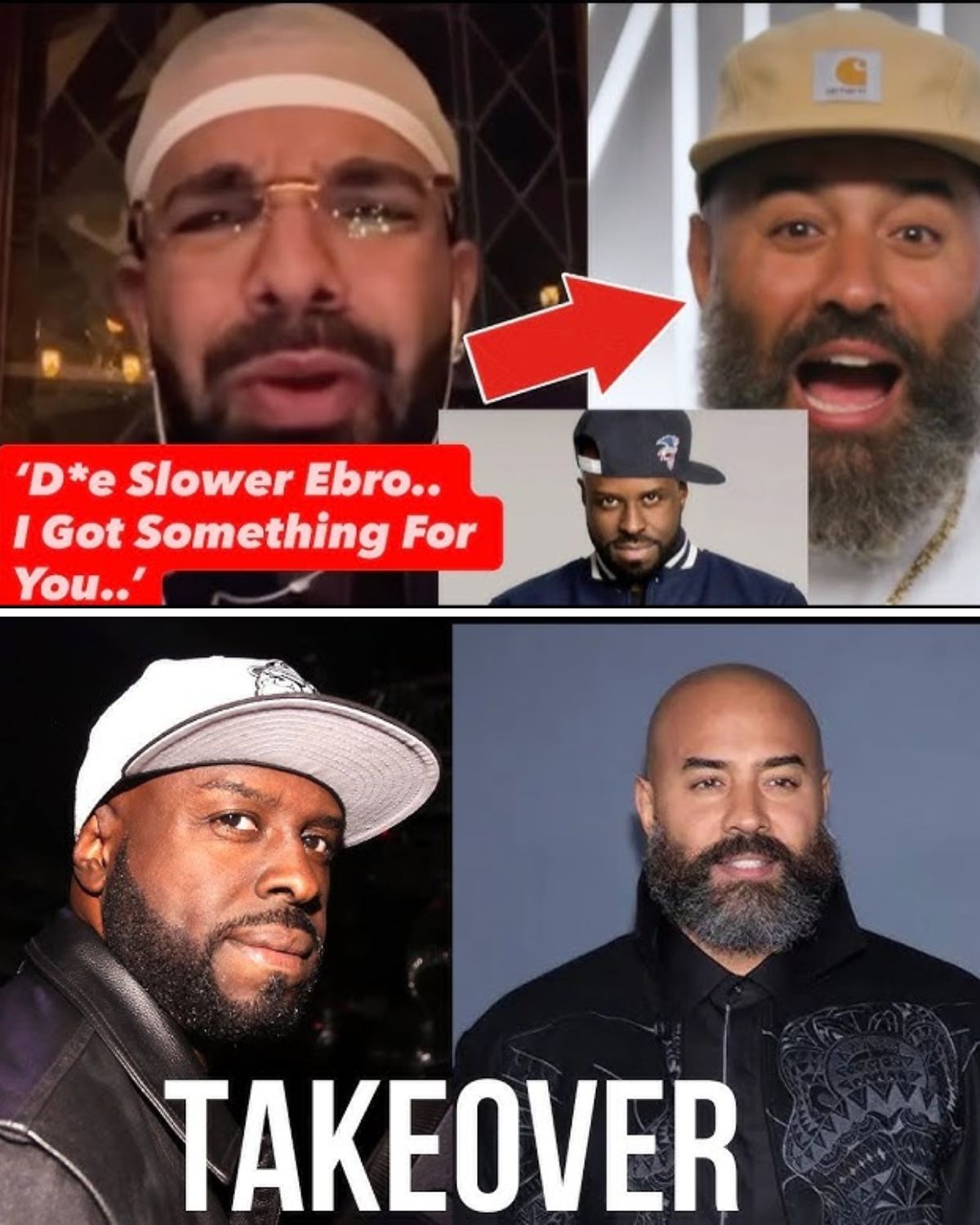
The simmering tensions within the hip-hop media landscape have erupted into a direct and alarming confrontation, as global superstar Drake has been revealed to have sent a threatening private message to veteran radio personality Ebro Darden. The incident, stemming from longstanding criticism and the fallout from last year’s rap feud, has drawn in industry heavyweight Funk Flex and raised serious questions about the boundaries of artist-media relations.

Details of the shocking direct message emerged during Ebro’s own show on Apple Music. The former Hot 97 host shared that Drake contacted him via Instagram in the early hours of the morning with a menacing statement. The message read, “Die slower, [ __ ]. We got some [ __ ] for you,” marking a severe escalation from their previously friendly relationship.
Ebro’s on-air co-hosts immediately recognized the severity of the communication, with one stating it felt like a legitimate threat and even suggesting legal action. In response, Ebro attempted to deflect, replying to Drake, “Relax. You’re salty about losing to Kendrick. You’re not mad at me. Love, bro.” This attempt at de-escalation underscores the personal nature of the conflict, shifting it from professional critique to a deeply personal vendetta.
The context for this vitriol is multi-layered. Ebro was a vocal commentator during Drake’s intense and public lyrical battle with Kendrick Lamar last year. Earlier this year, he escalated his criticism, calling Drake “a sickness in the game” on air, a comment that clearly resonated with the artist. The dissolution of their past camaraderie makes the current hostility particularly stark.
Historical screenshots shared during the broadcast reveal a stark contrast. Just years ago, Ebro was offering Drake friendly advice on sleep schedules and wellness, signing off with “Health is wealth is the realest [ __ ].” The devolution from that supportive dynamic to a “die slower” threat highlights the profound damage inflicted by the Kendrick Lamar feud and its aftermath.
Adding another layer to the drama is the recent professional shakeup at New York’s iconic Hot 97 radio station. Ebro recently lost his flagship position there, with famed DJ Funk Flex reportedly taking over the timeslot. This professional setback for Ebro appears to have been met with celebration from Drake, timing his hostile message in its wake.
In a surprising twist, Funk Flex himself intervened, not to side with Drake but to defend Ebro and the culture of commentary at Hot 97. On his show, Flex addressed Drake directly, suggesting the artist’s focus is misplaced. “Drake should be wondering about Kendrick and his next album,” Flex stated, acknowledging Drake’s veteran status while bluntly noting, “Kendrick definitely touched you up.”

Flex’s defense frames Drake’s message as an attack not just on Ebro, but on the institution of Hot 97 itself, which has long been a platform for unfiltered hip-hop discourse. This positions the conflict as one between an ultra-sensitive global superstar and the critical media apparatus that has historically helped shape the genre.
The specific wording of Drake’s threat—”We got some [ __ ] for you”—implies planned action beyond mere words, sparking widespread speculation. Industry observers are questioning whether this signals a coordinated campaign to undermine Ebro’s remaining role at Apple Music, potentially involving business pressures or public shaming tactics from Drake’s extensive network.
Legal analysts suggest the direct “die slower” statement could potentially form the basis for a harassment or threats complaint, though such cases involving public figures are complex. The public nature of the reveal, however, has already tried Drake in the court of public opinion, with many criticizing the move as disproportionate and dangerous.
This incident exposes the raw nerve left exposed by the Kendrick Lamar battle, suggesting Drake’s defeat was not merely lyrical but psychological, leaving him targeting perceived enemies in the media. The 3:30 AM timestamp of the message itself has become a topic of analysis, interpreted as a sign of obsessive anger.
For Ebro, the threat arrives at a vulnerable moment, compounding professional uncertainty with genuine personal safety concerns. The situation forces a reckoning on the limits of critique in hip-hop journalism and the potential consequences when an artist with Drake’s influence decides to retaliate personally.
The hip-hop community is now watching closely to see if Drake will clarify or double down on his message, and what form the promised “[ __ ]” might take. Whether this remains a war of words or escalates further could define artist-media relations for years to come, testing the very foundations of dialogue and dissent within the culture.