Stephen A. Smith has stirred up controversy after laughing at 𝓵𝓮𝓪𝓴𝓮𝓭 footage of boxing champion Claressa Shields getting knocked down by a male sparring partner. The incident has reignited debates about gender dynamics in combat sports, with Shields defending her ability to compete against men while Smith argues against it, claiming women shouldn’t face male fighters.
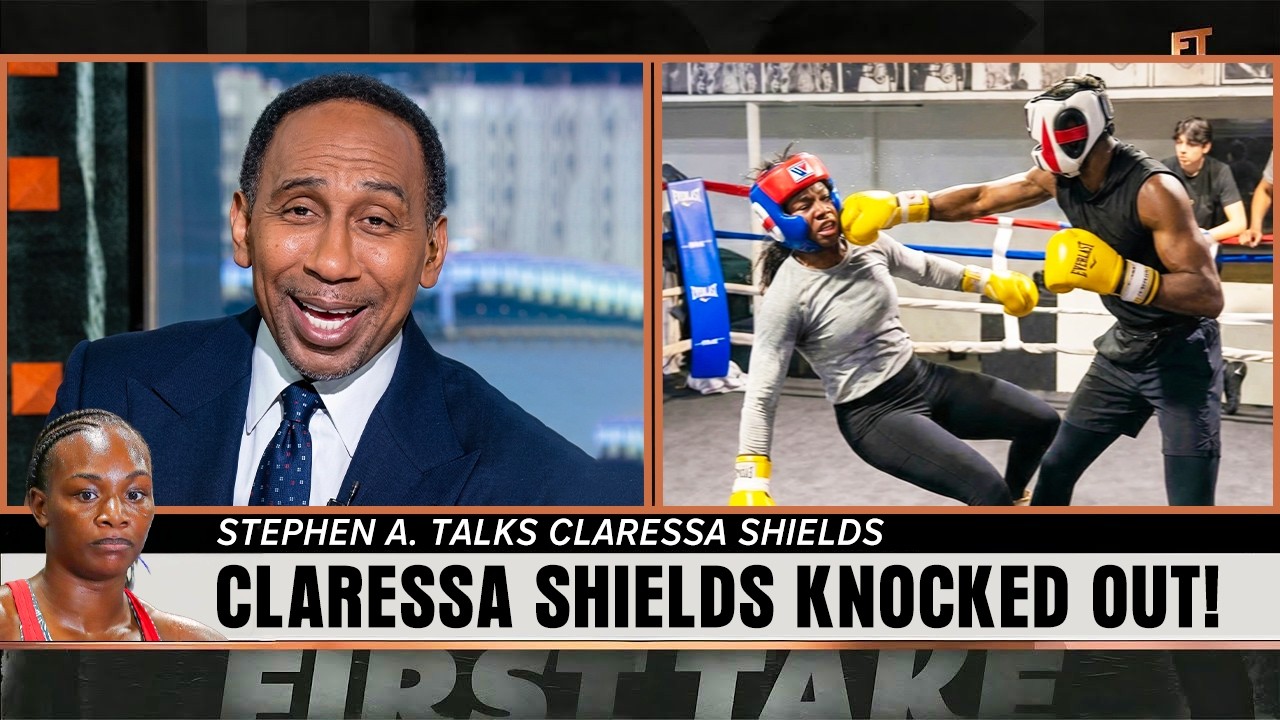
In a recent segment, Smith reacted to the footage, chuckling as he suggested that Shields shouldn’t be competing against male fighters like Terrence Crawford or Canelo Alvarez. His comments came after Shields expressed confidence in her ability to spar with men, even claiming she has knocked out male partners in the past.
Shields, a two-time Olympic gold medalist and undisputed champion, was quick to defend herself, stating that one knockdown during sparring doesn’t define her skills. “I’ve been sparring with men since I was 11 years old,” she emphasized, asserting her experience in the ring. Shields has also called out male boxers, including Rolando Romero, fueling further debate about the feasibility of mixed-gender matchups.

Smith’s remarks echo a long-standing sentiment in combat sports that highlights the physical differences between male and female fighters. He drew parallels to Ronda Rousey’s past claims of being able to beat Floyd Mayweather, suggesting that while some women can compete at high levels, the elite male fighters possess advantages that make such matchups risky and potentially dangerous.
Despite the backlash, Shields remains undeterred, insisting that she can compete with the best male boxers. “I drop men. I bust men’s noses. I beat men up all the time,” she declared, showcasing her confidence and determination to challenge gender norms in boxing. She believes her skills and extensive experience make her a formidable opponent, regardless of gender.
However, critics argue that her call-outs may be more about publicity than actual competition. Many question whether boxing organizations would sanction such fights, citing safety concerns and the inherent advantages male fighters have due to their physiology.

In a world where women’s boxing is gaining traction, Shields continues to push boundaries, advocating for equal opportunities and recognition in the sport. She recently revealed that she has earned over $8 million in her career, emphasizing the growing market for female athletes.
As the debate rages on, Shields’ bold assertions and Smith’s skeptical commentary highlight the ongoing struggle for equality in sports. The question remains: should women like Shields pursue fights against men, or is their legacy secure within the women’s division? Fans and pundits alike are eager to see how this narrative unfolds in the boxing world.