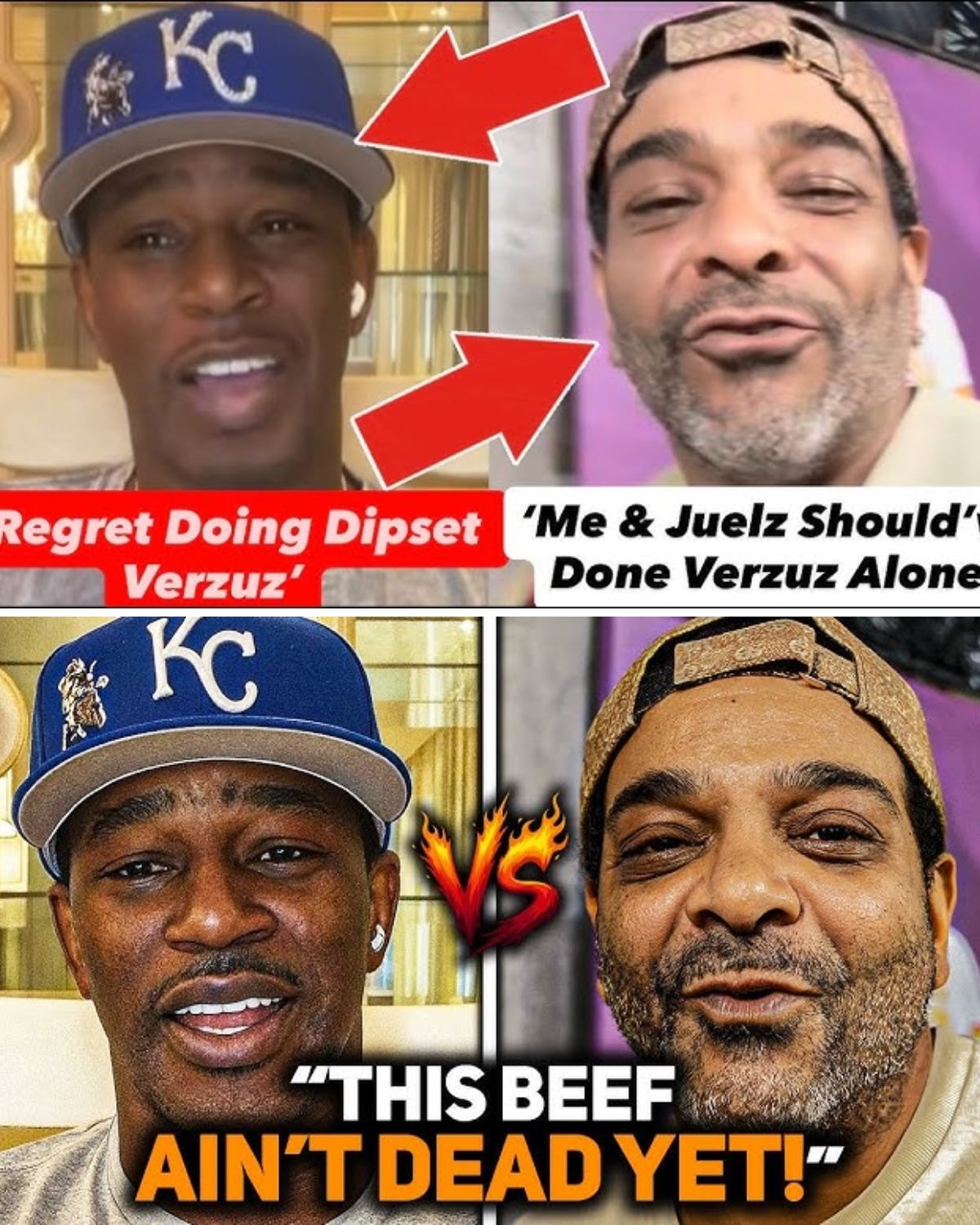
The long-simmering tensions within the legendary Harlem rap collective Dipset have erupted into a public and bitter new feud, casting serious doubt on the group’s future. Core members Cam’ron and Jim Jones are openly trading accusations and insults, reigniting a five-year-old grievance over their losing performance in the 2020 Dipset vs. The Lox Verzuz battle. This renewed war of words exploded across social media and podcasts this week, revealing deep-seated resentment about the event’s genesis and financial negotiations. The conflict escalated when Jim Jones reposted a clip from the infamous Verzuz, captioning it with a provocative suggestion that he and fellow Dipset member Juelz Santana should have performed alone.
“Yo, me and Juelz Santana should have did the Verzuz by ourselves,” Jones wrote, a statement widely interpreted as blaming Cam’ron for the collective’s loss to the gritty lyricism of The Lox. This public jab did not go unanswered, triggering an immediate and pointed retaliation from the group’s most recognizable face.

Cam’ron addressed the slight on his popular “It Is What It Is” live stream, not only firing back but labeling the entire Verzuz appearance as one of the worst decisions of his career. He framed his participation as a reluctant concession made solely from a sense of team loyalty, a move he now profoundly regrets.
“I should have never did the Verzuz. I told [them] don’t do the Verzuz. I don’t want to do the Verzuz, but I’m a team player and it was the wrong decision that I made,” Cam’ron stated emphatically. “No more of that.” This stark admission undermines the unified front the group has attempted to project during recent reunion tours.
The current public spat is merely the surface of a much deeper financial and ethical dispute recounted by Jim Jones in recent interviews. Jones has accused Cam’ron of “back dooring” the team during the Verzuz negotiations, alleging his longtime collaborator made secretive, self-serving demands that jeopardized the deal for everyone.
According to Jones, while he secured a substantial payday for the entire crew, Cam’ron pursued separate, excessive incentives for himself. These purported demands included a share of door revenue, stock in the Triller platform, free production from hitmakers like Swizz Beatz, and a percentage of the event’s future streaming views.
“I got everybody their money,” Jones claimed. “Then I started poking my own head like, I want the door money, I want stocks in Triller… And I got all that too. But he say that’s me being a businessman. Nah, you being a sucker doing back door.” Cam’ron has historically defended such maneuvers as savvy business, a fundamental disagreement now fueling their public fallout.
Industry observers are sounding alarms that this very public airing of dirty laundry could inflict grave damage on the Dipset brand’s commercial viability. The group, which has experienced multiple hiatuses and reconciliations over two decades, has recently capitalized on nostalgia with successful sold-out tours.
This fragile reunion business model relies on the perception of brotherhood and shared history. The explicit revelation that key members resent performing together and bitterly dispute past business dealings threatens to shatter that illusion for promoters and fans alike.
“Now that people know that you guys absolutely hate performing with each other, nobody’s going to want to book Dipset for anything,” warned the host of the YouTube commentary that first compiled the new evidence of the feud. The financial implications could extend to all members, including those who rely on the collective’s touring income.
The debate over the 2020 loss itself remains a touchpoint. Fans and commentators have largely agreed The Lox’s raw, street-oriented catalog was a mismatch for Dipset’s more melodic style. Many argue that Cam’ron was the only Dipset member who performed at his peak that night, making Jones’s suggestion of a solo performance with Juelz Santana seem particularly misguided to critics.
This ongoing petty warfare, stretching from 2020 to the brink of 2026, highlights the fragile nature of hip-hop legacies. It demonstrates how unresolved business disputes and bruised egos can fester for years, eventually exploding and endangering the very institution the artists worked to build.
The central question now plaguing the hip-hop community is whether this rift is merely another chapter in Dipset’s long history of internal drama or a terminal fracture. With both principals digging in and attacking the foundation of their partnership, the path to another lucrative reunion tour appears increasingly obstructed.
For fans holding out hope, the situation presents a bleak outlook. The economic incentives that have driven past reconciliations may be insufficient this time, overpowered by publicly stated regret and accusations of betrayal. The legacy of Dipset, once a defining force in New York hip-hop, is now clouded by a very modern conflict of money, memory, and blame.
The final repercussions will likely be measured in lost opportunities and canceled dates. As the argument continues to trend across social media platforms, the damage to their professional reputation is accruing in real time, proving that some lyrical battles have consequences far beyond the stage.