The hip-hop world is engulfed in a new firestorm as Curtis “50 Cent” Jackson launches a blistering, multi-target attack on fellow rappers Jim Jones, Fabolous, Maino, and Dave East for their critique of his explosive Diddy documentary. This escalation marks a significant broadening of 50’s ongoing campaign against anyone questioning the ethics or success of his Netflix series, “Diddy: The Final Chapter.”

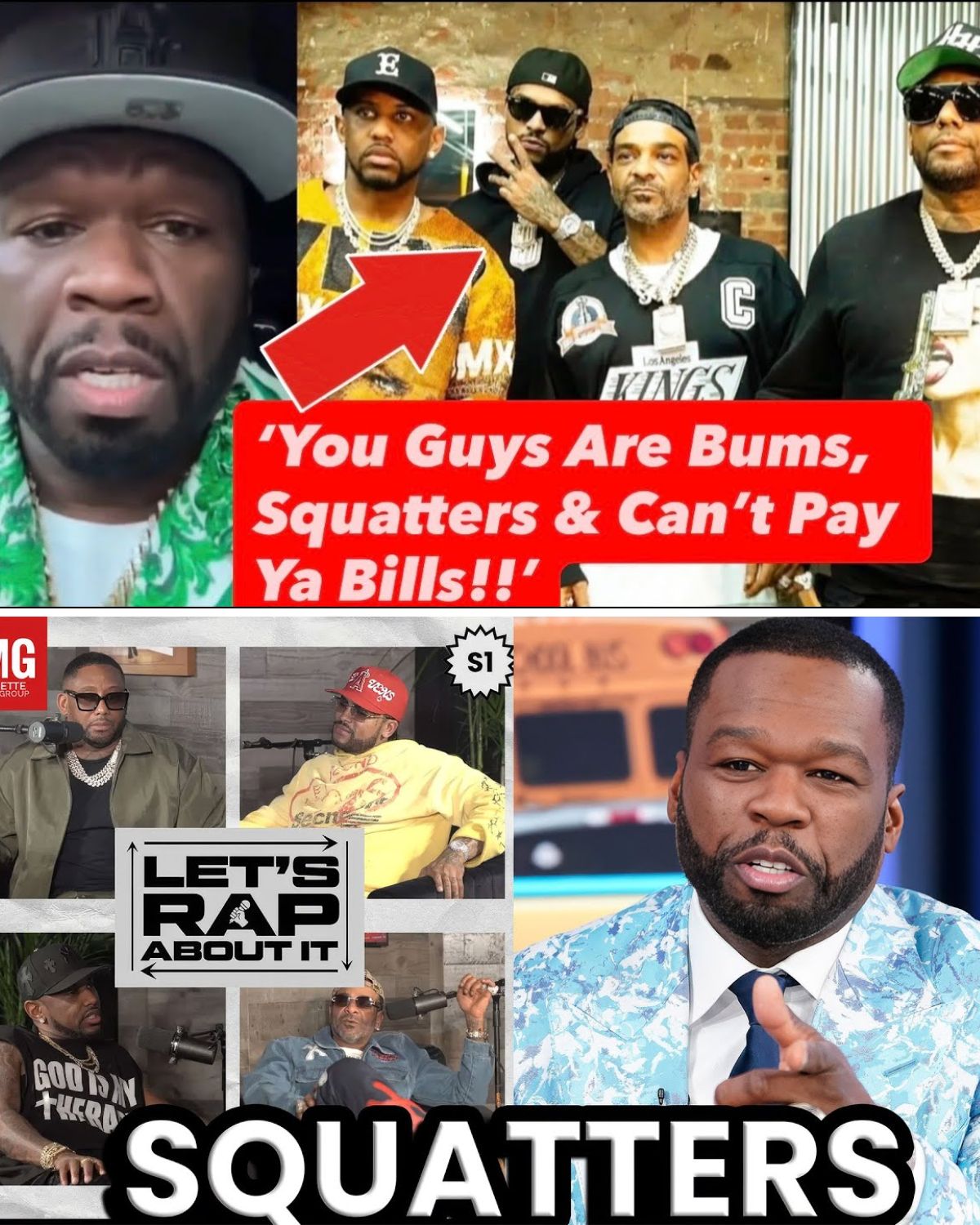
The catalyst was a recent episode of the podcast “Let’s Rap About It,” hosted by Jim Jones. During the discussion, the panel, which included Fabolous, Maino, and Dave East, engaged in a nuanced conversation about the morality of creating documentaries about public figures without their consent. While never directly naming 50 Cent or Diddy, the implication was clear.
The hosts universally condemned the practice, comparing it to releasing a sex tape without permission. They argued such projects are inherently “facetious and petty,” designed to make a subject “look weak” rather than celebrate their accomplishments. The consensus was a firm “thumbs down” for documentaries made without the subject’s involvement or approval.
50 Cent’s response was immediate, personal, and scorching. Taking to his Instagram, which commands an audience of over 37 million followers, he bypassed any debate on documentary ethics and went straight for the jugular, targeting the individuals’ careers and finances. In a series of now-deleted posts, he labeled the four rappers “squatters.”
He posted the dictionary definition of the term—”an individual who occupies a property without legal title, permission, or a lease”—and alleged in a caption that the group owes “$250k for the space they’re filming their podcast in.” He derided them as “bums” trying to win best-dressed awards while being unable to pay their bills.
The attack became deeply personal against Jim Jones. 50 Cent shared an article detailing Jones’s past home foreclosure and posted photos seemingly intended to paint the Dipset capo as a “groupie.” One image showed Jones alongside Jay-Z, Diddy, and Fat Joe, while another placed him at a boxing match, implying he seeks proximity to fame.
This offensive is the latest in 50 Cent’s relentless defense of his documentary, which he proudly touts as a global number-one hit for Netflix. For days, he has used his social media platform to celebrate its viewership metrics and attack critics, including former Roc-A-Fella co-founder Dame Dash and commentator Marlon Wayans.
The strategy appears to be one of overwhelming force, aiming to shame and discredit detractors rather than engage with their arguments. By shifting the focus to personal finances and social standing, 50 has effectively changed the narrative from a discussion about media ethics to a public humiliation campaign.

Industry observers note the complex web of existing tensions. While 50 Cent and Jim Jones have a long and publicly frosty history, his relationship with Fabolous was previously considered at least neutral, making this broadside particularly surprising. The fallout suggests no previous alliance is safe when 50 perceives an attack on his lucrative documentary venture.
Paradoxically, 50’s fury has delivered unprecedented publicity to the “Let’s Rap About It” podcast. The mention to his massive following is promotional exposure money cannot buy. It all but guarantees their next episode, likely featuring a response to these allegations, will be one of the most anticipated in the podcast’s history.
The incident raises critical questions about power, critique, and reputation in the digital age. 50 Cent’s actions demonstrate a clear philosophy: any criticism, no matter how diplomatically framed, will be met with disproportionate, personal retaliation designed to inflict maximum reputational damage.
This approach silences dissent through intimidation but also risks amplifying the very voices it seeks to diminish. As the lines between media critique, personal beef, and financial shaming blur, the hip-hop community and its observers are left to watch the fallout.
The central question now hangs over the industry: will Jim Jones, Fabolous, Maino, and Dave East choose to engage in a war of words with one of music’s most formidable and relentless tacticians, or will they let the allegations stand unanswered? Either path promises to fuel this controversy for days to come.
Meanwhile, the documentary at the heart of the storm continues to dominate streaming charts, its success inextricably linked to the off-screen drama 50 Cent so expertly cultivates. The controversy, it seems, is not a bug in his system but a central feature of its promotional engine.
As the situation develops, the focus remains on whether this personal and financial line of attack will become a new standard for silencing opposition in the public sphere, setting a precedent where debate is circumvented by the weaponization of personal circumstance.